
Hip Dysplasia Treatment in Little Rock, AR

What is Hip Dysplasia?
Dysplasia of the hip can lead to disabling hip pain due to the cartilage wearing out prematurely. This results from abnormal development of the hip joint during in utero development and in infancy, the hip is not positioned properly to form the normal deep socket that is needed for a normal hip.
Fortunately, now there is a very high awareness of this problem, and pediatricians and obstetricians always screen for this routinely. Every newborn is examined many times in infancy to find and treat this problem. When caught early it can be treated by simply wearing a harness for several months.
Discovered as an older child, more complicated surgical interventions are needed to reposition the hip.
What Can Cause Hip Dysplasia?
It is not unusual for an adult to start experiencing new pain in the hip only to learn from X-rays that the hip has deteriorated due to a mild dysplasia of the hip previously un-diagnosed. If the deformity and damage are mild, the hip socket or acetabulum can be rotated by making some very precise bony cuts around the outside of the socket and restore a more normal and deeper shape to the socket. These bony cuts comprise the Ganz Osteotomy procedure. This is sometimes treated with a bony cut of the femur bone as well to re-position the head in the socket.
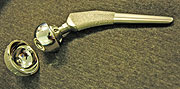
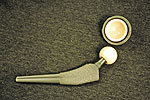
Far more often the degenerative change has progressed so far that the best option is replacement of the joint, and Total Hip Replacement is performed. With newer, longer-lasting bearing surfaces such as Ceramic on Ceramic and Metal on Metal, we believe these replacements will last many years longer than the conventional metal on the plastic replacement that historically has lasted 10 -15 years.
Why Choose Dr. Newbern?
- Treatment is based on both the shape of the hip and the amount of cartilage damage. Adult hip dysplasia can range from a structurally shallow socket with preserved cartilage to end-stage arthritis. The appropriate treatment changes significantly depending on how much degeneration has already occurred.
- Dr. Newbern is focused on adult hip reconstruction. His adult-reconstruction fellowship and longstanding focus on hip and knee problems are directly relevant when dysplasia has progressed to painful degenerative disease requiring reconstructive planning.
- Joint-preserving and joint-replacement pathways can be discussed. Some younger patients with limited degeneration may be candidates for corrective procedures designed to improve hip coverage or alignment, while advanced arthritis may be better treated with total hip replacement.
- The consultation looks beyond pain alone. Imaging, socket depth, femoral anatomy, range of motion, gait, age, activity level, and the extent of cartilage loss all help determine whether preservation or replacement offers the more appropriate path.
Frequently Asked Questions
What is adult hip dysplasia?
Hip dysplasia occurs when the ball-and-socket joint did not develop with normal coverage or depth. A shallow socket can place abnormal stress on cartilage and lead to pain, instability, labral injury, and earlier osteoarthritis.
Can hip dysplasia first cause symptoms in adulthood?
Yes. Mild dysplasia may go unrecognized during childhood and only become painful later as the joint experiences years of abnormal loading and cartilage wear.
Does every adult with hip dysplasia need a hip replacement?
No. Patients with preserved cartilage may sometimes be candidates for joint-preserving surgery. Total hip replacement is generally considered when degenerative damage is advanced and symptoms substantially limit function.
How is hip dysplasia diagnosed?
Diagnosis usually combines history, physical examination, and X-rays that show the shape and coverage of the hip. Additional imaging may be useful when the degree of cartilage, labral, or bone involvement needs further clarification
To learn more about our Avascular Necrosis (AVN) Treatment procedure that we offer at Arkansas Speciality Orthopaedics, contact us today at 501.663.3647 or schedule a consultation.