
Post-Traumatic Arthritis Joint Care in Little Rock, AR
What is Post-Traumatic Arthritis?
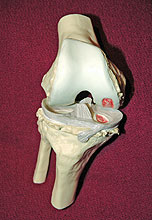
This is arthritis that results from direct injury to the joint surfaces. The injury occurs to the cartilage and/or bone tissues of the joint, and the resulting damage leaves the joint surface uneven and roughened.
What Causes Post-Traumatic Arthritis?
This can result from athletic injuries or falls. But more often these occur from higher-energy injuries such as automobile, ATV or motorcycle accidents.
The original treatment for the trauma will include putting the injured joint back together as perfectly as possible. Often a fracture into the joint is reduced back into position and the underlying fractures of bone are stabilized in place by screws, pins, plates and rods.
Unfortunately, in some cases the damage to the joint surfaces progresses to arthritic degeneration of the joint that becomes unacceptably painful and stiff.
What People Say About Us!
Wonderful staff and physicians. I received a thorough explanation from the physician I saw as to what was wrong and how to correct it without any surgical invasion. That is much appreciated.
Click here to read more reviews.
How is Post-Traumatic Arthritis Treated?
Conservative Post-Traumatic Arthritis Treatment
Conservative treatment measures include modifying one’s activities and unloading the joint with cane, crutches or walker. Also, supplemental glucosamine, Tylenol, anti-inflammatories, pain medications may help. Physical therapy to regain motion and strength and coordination is often helpful. Weight loss in the overweight patient is important.
Injections of corticosteroid can be helpful, but can be used only 3-4 times per year. ‘Viscosupplementation’ injections with hyaluronate (Synvisc) may also help. If successful, these may work for 6 months or longer.
A compartment –unloading brace for the knee can relieve pain and delay progression of knee arthritis.
Post-Traumatic Arthritis Surgical Treatment
When all of these conservative measures are not working, then surgery may be recommended.
If the joint damage is in a very small, localized area, possible options include:
- A localized transplant of bone and cartilage
- A micro-fracture technique to encourage ‘scar-cartilage’ to grow
In most cases the joint damage involves larger areas and some form of realignment or resurfacing in recommended:
- Realignment osteotomy of the knee
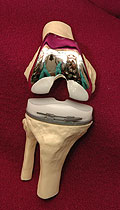
- Partial replacement of the joint such as a Uni-compartmental replacement of the knee
- Total joint replacement of the hip or knee
If you would like to learn more about Post-Traumatic Arthritis, or to schedule an appointment, click to call us today! 501.663.3647
Why Choose Dr. Newbern?
- Experience with both joint preservation and replacement options. Post-traumatic arthritis can
range from localized cartilage damage to advanced joint destruction. Dr. Newbern evaluates
whether treatment should focus on preserving the joint, realigning it, partially replacing it, or
proceeding to total joint replacement. - Treatment is based on how the original injury changed the joint. Prior fractures, hardware,
altered alignment, cartilage loss, and scar tissue can make post-traumatic arthritis different from
routine age-related arthritis. Care is planned around the patient’s specific injury history and
current anatomy. - Conservative treatment is considered before surgery when appropriate. Activity modification,
physical therapy, walking aids, bracing, medication, injections, and weight management may all
play a role before surgery becomes necessary.\ - Adult-reconstruction training matters when the joint is complex. When prior trauma has
changed the structure of the hip or knee, fellowship-level experience in reconstruction can be
especially valuable for surgical planning and implant selection.
Frequently Asked Questions
What is post-traumatic arthritis?
Post-traumatic arthritis develops after an injury damages the cartilage, bone, or alignment of a
joint. Over time, the damaged surface can become rough, painful, stiff, and progressively arthritic.
Can post-traumatic arthritis develop years after an injury?
Yes. Symptoms may appear long after a fracture, dislocation, sports injury, or high-energy trauma,
especially when the original injury changed the joint surface or alignment.
Does post-traumatic arthritis always require joint replacement?
No. Early or localized disease may respond to nonsurgical care or joint-preserving procedures.
Replacement is generally considered when the damage is extensive and pain or loss of function is
no longer controlled with less invasive treatment.
Can previous plates, screws, or other hardware affect treatment?
They can. Prior implants, scar tissue, bone loss, and altered anatomy may influence imaging,
surgical exposure, implant selection, and whether hardware must be removed. This is one reason
a detailed review of the original injury and prior surgery is important.